
Touch-type, Read and Spell with confidence

An award-winning, multi-sensory course that teaches typing, reading, and spelling

Typing course interface on a laptop screen

Featured in

Typing course interface on a laptop screen
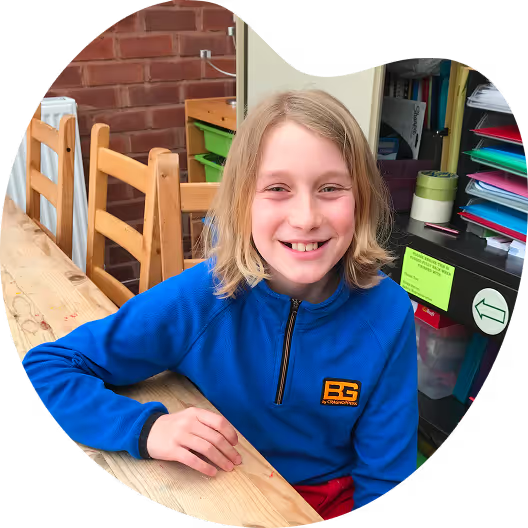
Child portrait
TrustPilot 5-start rating

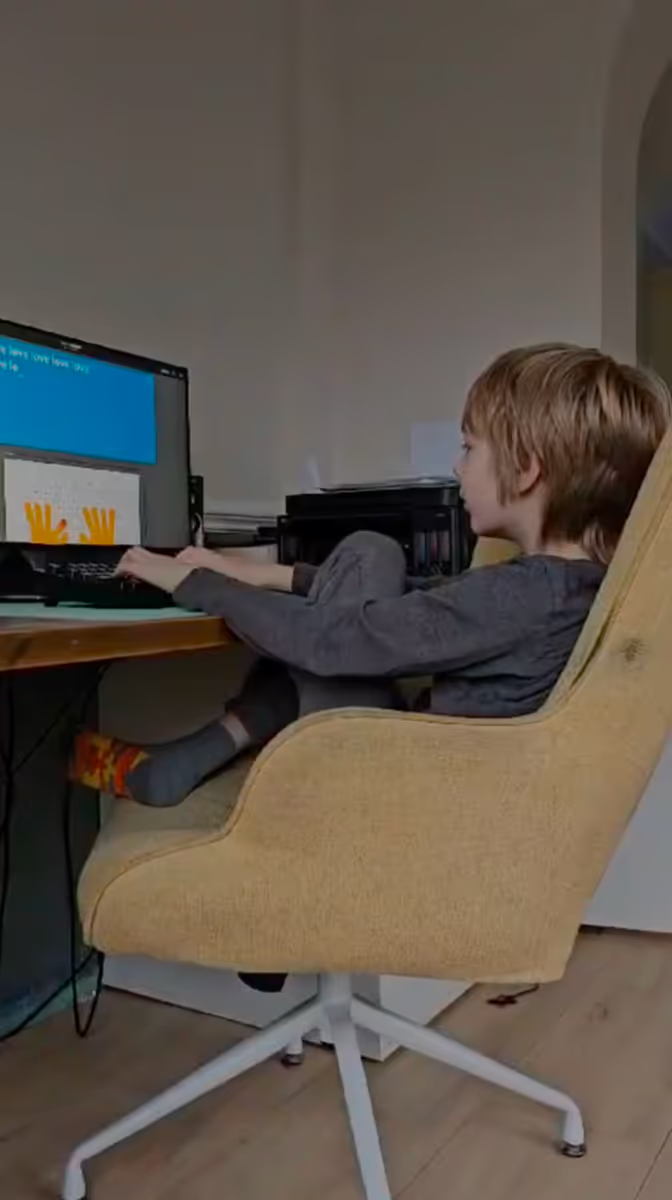
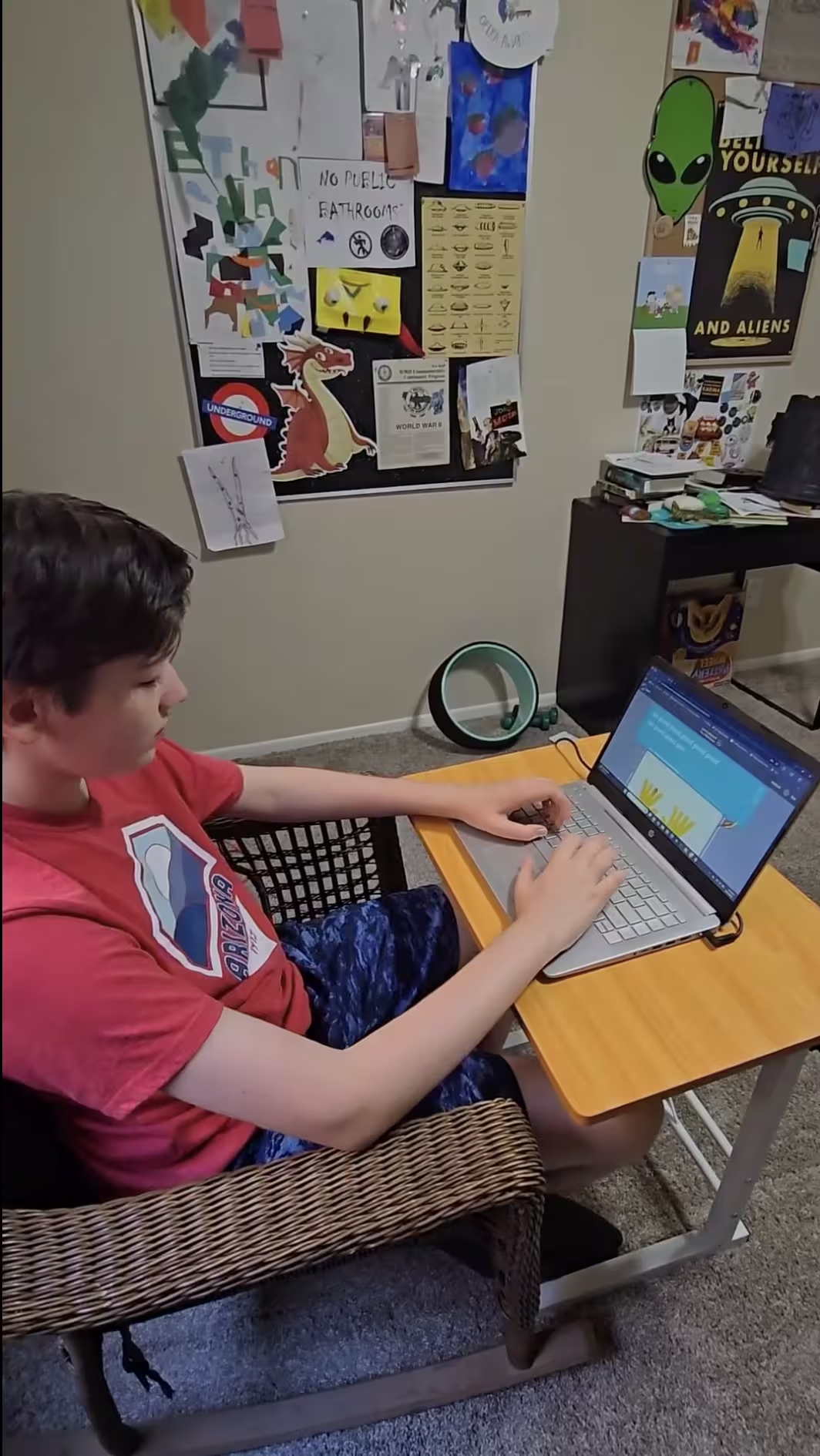
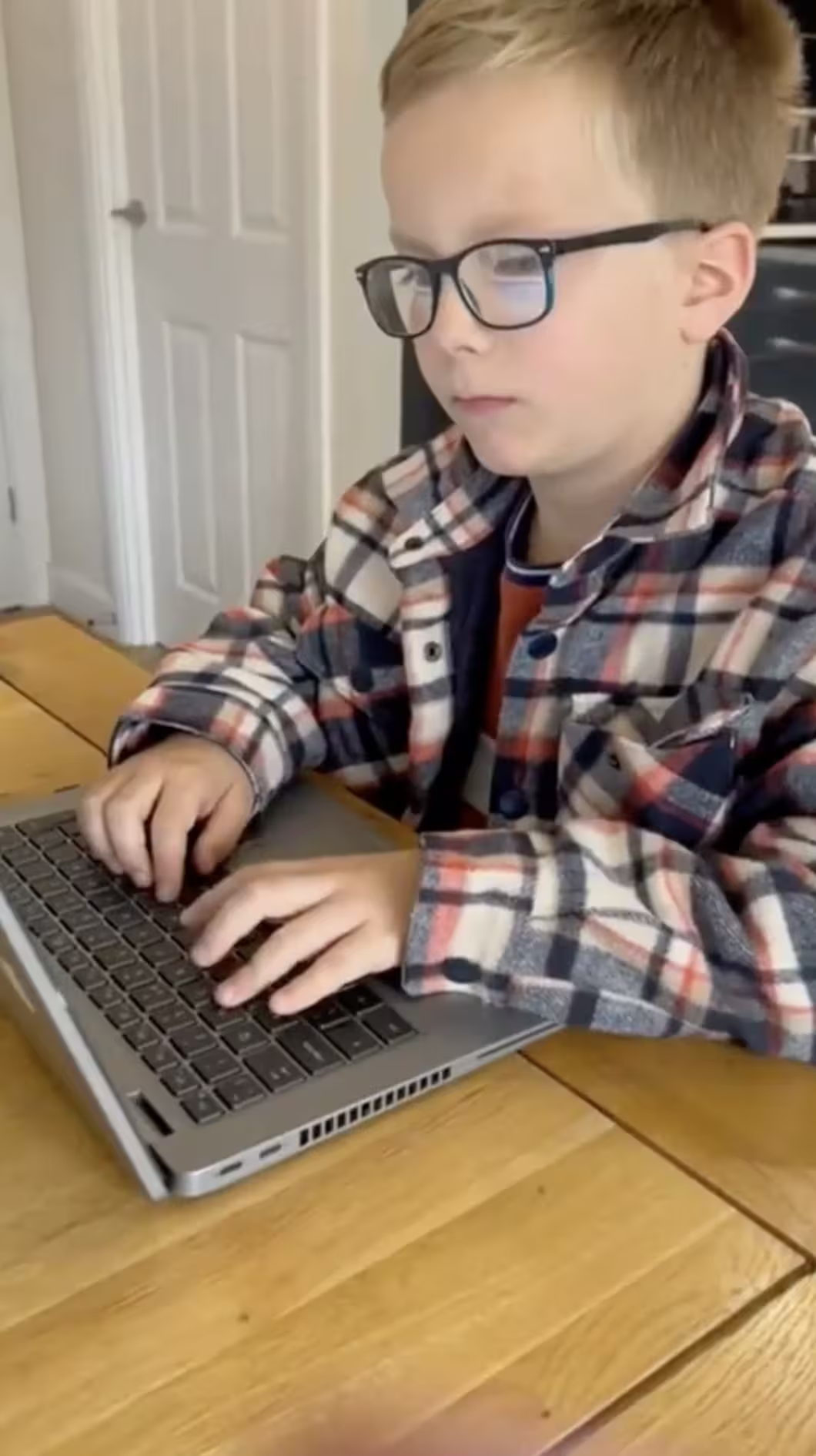
Having the hand and finger guide on the screen showing which keys to press, really worked for my son.

For my son, who finds writing physically painful and mentally quite difficult, being able to touch-type has been what works for him. In regards to TTRS, it ticks all of the boxes. It’s online, easy to access, fairly priced and has the added benefit of supporting reading and spelling skills too. My daughter has dyslexia and we’re looking forward to getting her started on the program next!

Carrie

Parent of a child with dyslexia and dyspraxia

Why families and teachers love Touch-type Read and Spell

Typing, spelling, reading and writing support are bundled into one solution

Developed in line with language and education research

Caters to different ability levels

No training required, quick and easy setup

Helpful insights via dashboards and reporting

Encourages self-directed learning

Builds confidence at the computer, focus and concentration

Is appropriate for children aged 7+, teenagers and adults

Includes English, Science, Geography subjects and more

TTRS 30 Years badge

Over 30 years of expertise

TTRS provides a high-quality, phonics and spelling-based, online typing course that teaches touch-typing at the same time as developing the power of literacy.
The TTRS Method Badge

Based on extensive research

Our course teaches typing skills in a unique, multi-sensory way by following a structured literacy curriculum. Core content is based on the work of Orton and Gillingham.

Find the solution that’s right for you

Explore our tailored subscriptions and find the perfect fit

Families

For individuals and families, suitable for kids and adults

Schools and tutors

Touch-typing, reading and spelling support for students

Homeschoolers

Touch-typing as part of a homeschool curriculum

How does Touch-type Read and Spell work?

Modular design

TTRS comes with separate student and admin accounts. The main course is modular in design and contains 24 levels with 31 modules in each level. A module typically takes a few minutes to complete. Student success is encouraged by immediate feedback and positive reinforcement. This feedback includes a score that is based on completion rates and accuracy, not speed or time taken. Learners can earn points toward trophies and certificates.

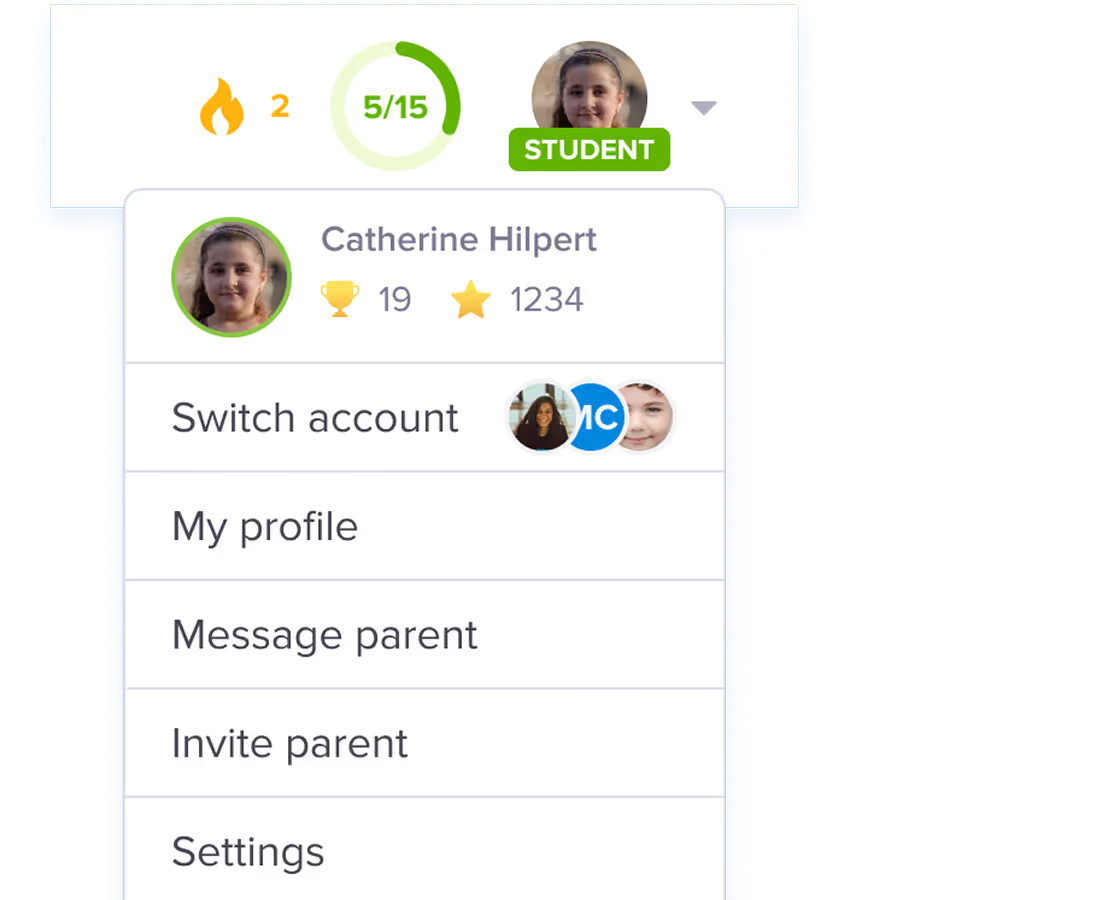
Student progress and module interface

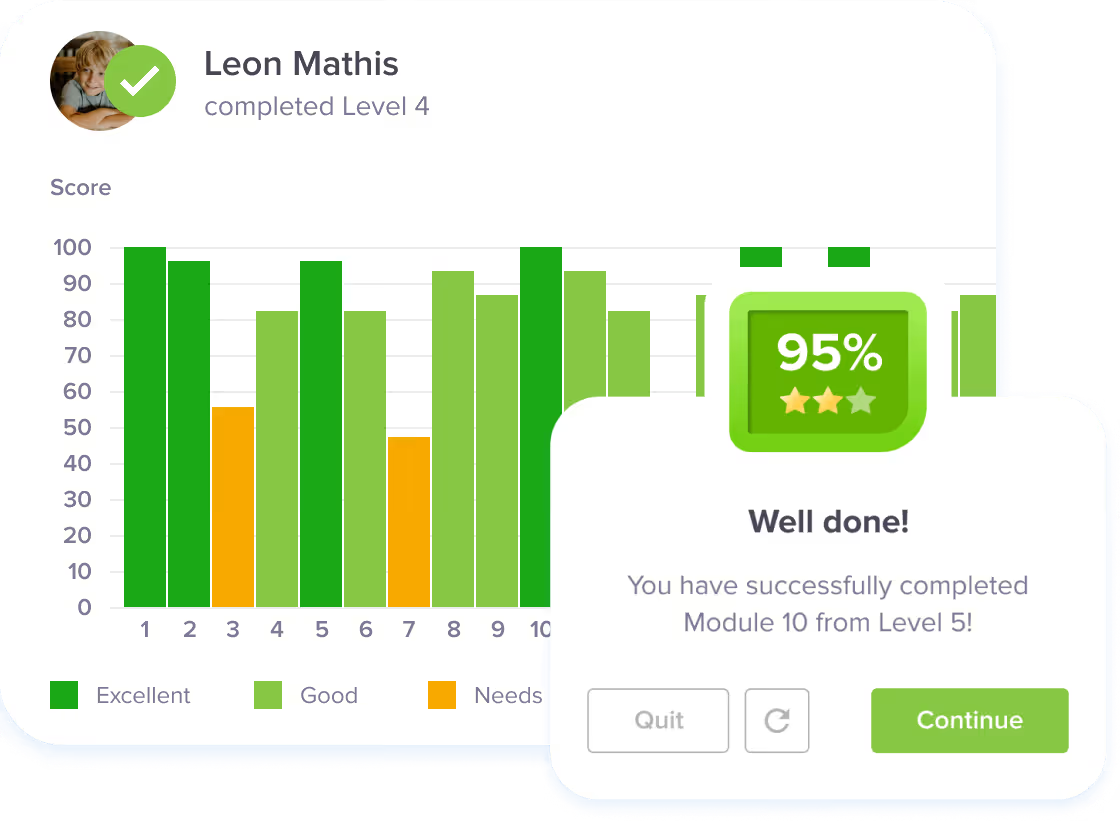
First score – first success

The course starts with students learning to touch-type, read and spell the vowels - a , e , i , o , u. The audio track accompanies the letters as they appear on screen, reinforcing sound-letter correspondence, which is a crucial skill for sounding out words in reading. The student then receives their first score - and success!

Student receiving first score and progress feedback

Phonics and repetition

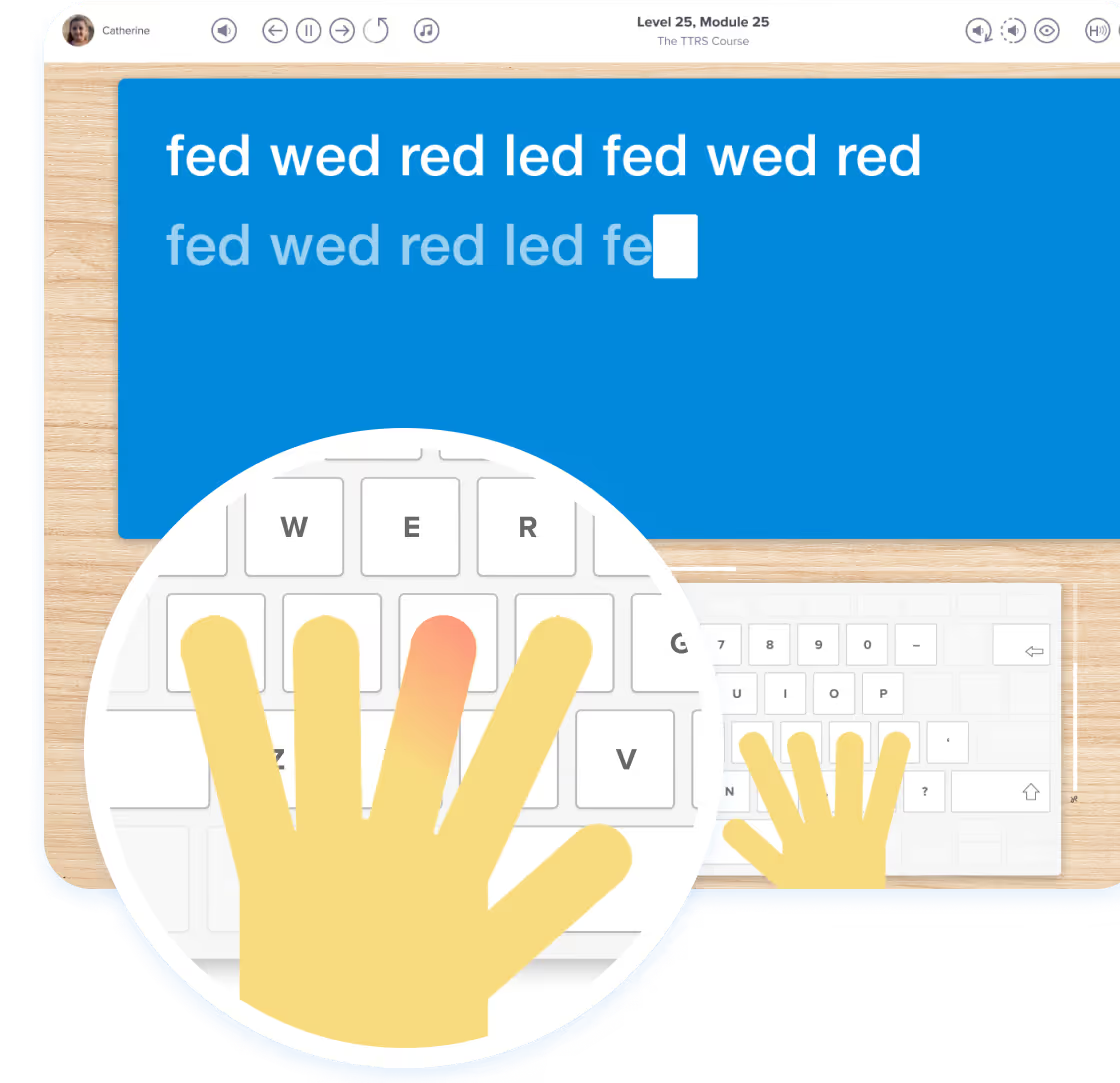
In the second level, the student is introduced to words grouped by onset, vowel-blend and final consonant. For example - fed, wed, led. This teaches phonics in context and at the same time the student learns the position of the keys using the on-screen hand guides. With repetition, words move from short-term to long-term memory and the skill of typing begins to feel more comfortable.

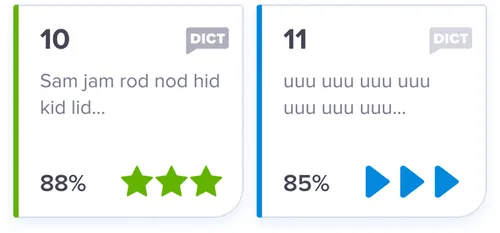
Every 5th module is a dictation module that removes the visual element encouraging the student to listen to the words and then type out what they hear. This develops spelling by testing sound-letter mapping skills.

Typing lesson with phonics and repeated words

Multi-sensory approach

TTRS uses a multi-sensory approach to repetition learning. Students hear the words spoken through headphones or speakers, see the words printed on the screen, and are prompted as to which fingers to press via the on-screen keyboard. Finally, through the sense of touch, they type out the words and learn to spell with their fingers.

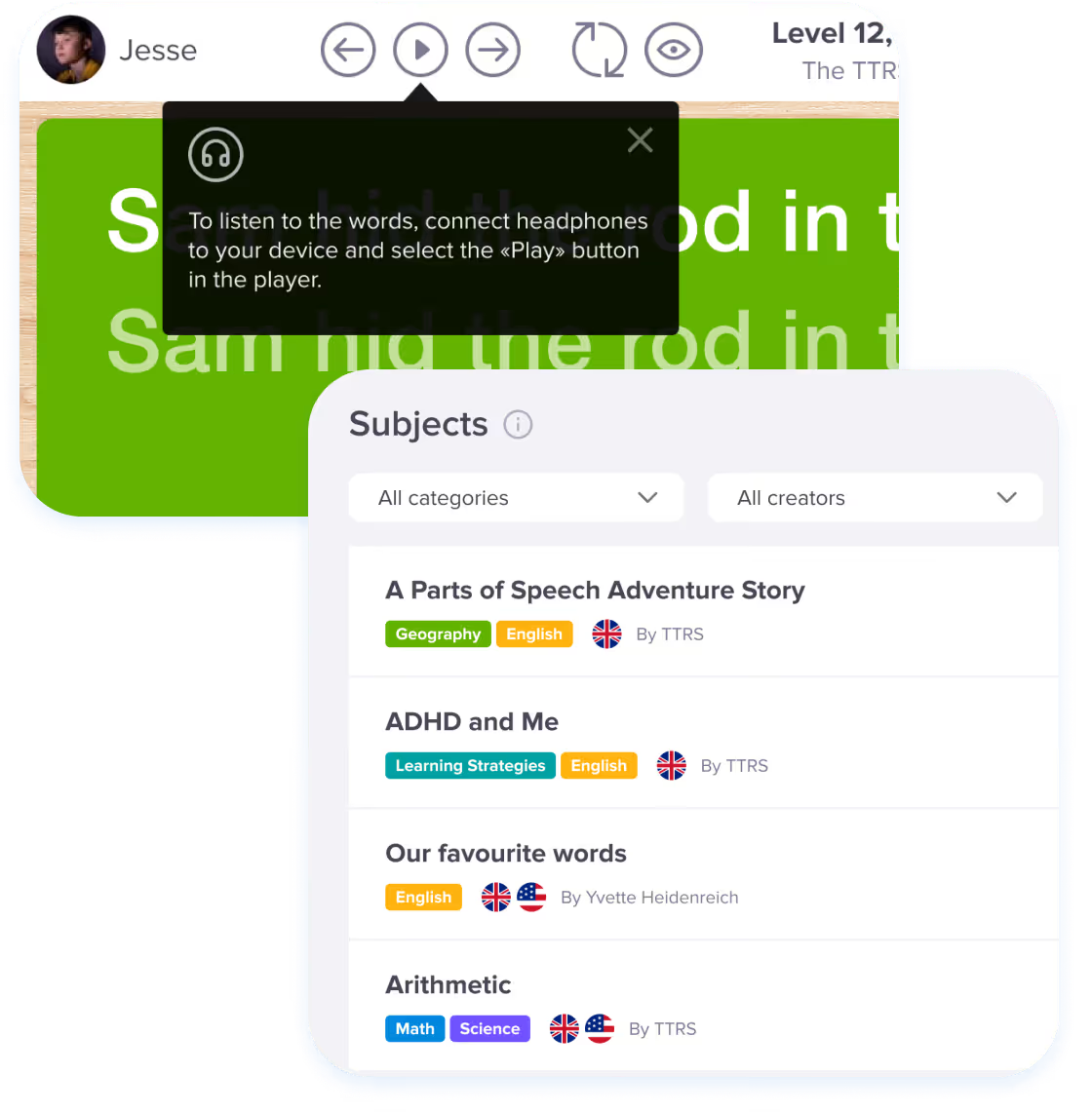
A TTRS subscription also includes access to English, mathematics, and science typing modules and admins can create custom subjects and add spelling lists too!

Multi-sensory typing interface with audio and visual guidance
Features

TTRS features

Trophies, certificates & weekly goals

Set targets and use awards to motivate learners and encourage regular use of the program

TTRS reporting

Track performance and manage student accounts on your smartphone with our reporting app

Free writing

Kick off their creativity! Have learners write inside TTRS and get post-session feedback on spelling & typing performance

Subject creator

Draft custom typing lessons and add spelling word lists so students can learn material in a multi-sensory way

Testimonials and reviews

Hear first-hand from our incredible community of users

TrustPilot 5-start rating
I got great help from the library...

I got great help from the library when I set up TTRS in our school. It is very easy to navigate around TTRS. My pupils also find it very easy to log on and work independently.

Jennifer O'Shea

Ireland

TrustPilot 5-start rating
Working smarter not harder

This program has gotten my daughter to apply herself and she is thriving. She needed spelling help and this is fixing the problem without us having to work harder. She loves TTRS and asks to do it daily. She is learning to type while boosting her spelling and reading skills all in one.

Leesa

Parent of a struggling speller

Frequently asked questions

Who is TTRS for?
From what age is TTRS suitable?
Can TTRS be used on multiple devices?
Will I need to install TTRS?
How do the UK and US versions of the course differ?
Which payment options do you have?
What if I'm not happy?
Can parents monitor a child's progress?

Used by

Logo of Ministry of DefenceBritish Dyslexia Association logoMarlborough College crestScotch College Melbourne emblemTonbridge School logoKings College School wordmark logoGeelong Grammar School logo

Find the solution that’s right for you

Explore our tailored subscriptions and find the perfect fit

Families

For individuals and families, suitable for kids and adults

Schools and tutors

Touch-typing, reading and spelling support for students

Homeschoolers

Touch-typing as part of a homeschool curriculum

Read and Spell Articles

7 ADHD Strengths and Benefits

Both of my boys were diagnosed with dyslexia when they were around age seven. The elder boy also has ADHD. We started off with a program that had more animation. But we found it hard to institute a daily regime because with games it’s just a bit too flexible. Especially with my eldest, he needed more structure. Then we tried Touch-type Read and Spell and it really worked!

This is some text inside of a div block.

Touch typing benefits

I began using the TTRS course after my English literacy level was tested and seemed low. I'm originally from South America and I work as a doctor in the UK. I also have dyslexia. Before TTRS, I used to type slowly and inaccurately with two-fingers. Now I am faster at the computer, make fewer errors, and write more professionally. My vocabulary has noticeably expanded too. I learned new words by looking up vocabulary using the dictionary tool inside TTRS.

This is some text inside of a div block.

What are the home row keys?

I homeschool my children who are in fourth and fifth grade. We got Touch-type Read and Spell for typing, but with the phonics support it’s benefited their spelling skills as well. They both do one lesson a day. I’ve noticed they’re more confident and that there’s been an improvement in their ability to sound out words too.

This is some text inside of a div block.

Typing tips for beginners

Over the years I’ve sort of self-taught myself typing, but I really like learning with Touch-type Read and Spell and it’s made a difference for me at work already! That’s because it makes me think about what I’m typing. When I write emails I normally look up and there are about ten red lines with errors. Now it’s about half that, and that’s only from using TTRS for 3-4 weeks.

This is some text inside of a div block.

16 Teaching strategies for EAL and ELL students in the classroom

I've found that children with dyslexia really benefit from the TTRS course, as do English as an Additional Language (EAL) learners and students with motor-skills difficulties. Following the lessons improves their concentration, confidence and spelling, and gives them invaluable typing skills they can use when handwriting is too difficult. The students are always saying to us 'When are we going to do our touch-typing!'
This is some text inside of a div block.

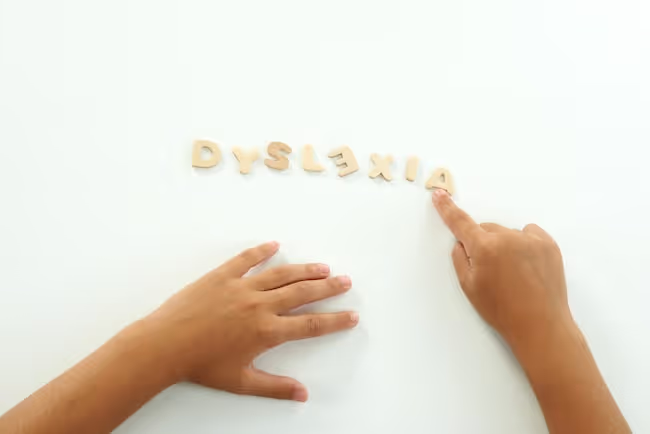
Different types of dyslexia

So far, TTRS has made a big difference in her literacy and typing skills. But what my daughter and I like best about the program is it doesn't make her feel stupid. We've tried a lot of different tools, and many of them can be quite demoralizing. Not TTRS. In fact, it's the opposite. Learning to type has been a huge confidence booster for her.
This is some text inside of a div block.

What is attention deficit disorder?

Both of my boys were diagnosed with dyslexia when they were around age seven. The elder boy also has ADHD. We started off with a program that had more animation. But we found it hard to institute a daily regime because with games it's just a bit too flexible. Especially with my eldest, he needed more structure. Then we tried Touch-type Read and Spell and it really worked!

This is some text inside of a div block.

Handwriting difficulties

My son has dysgraphia which affects his ability to write things out by hand. He also struggles with sensory issues, which means he can easily get distracted. I knew I wanted him to learn typing because I didn't want to see his creativity and ideas being hindered in any way.

This is some text inside of a div block.

Teaching children with Down syndrome to read

My son Josiah is 12 and he has Down syndrome. He struggles with spelling so we have the TTRS Settings set to Remember & Repeat. He sees, hears and types a word and then the word goes away so he has to type it again. I'm pleased because while Josiah doesn't have a lot of words per minute, he is actually touch-typing! Eventually, he'll get faster, but for right now he's doing great and he is very proud of himself – and that's what counts.

This is some text inside of a div block.

How to help a child with dyspraxia

I've found that children with dyslexia really benefit from the TTRS course, as do English as an Additional Language (EAL) learners and students with motor-skills difficulties. Following the lessons improves their concentration, confidence and spelling, and gives them invaluable typing skills they can use when handwriting is too difficult. The students are always saying to us 'When are we going to do our touch-typing!'
This is some text inside of a div block.

5 Tips for teaching sight words

A lot of the learning for homeschool these days is online and so my kids needed to know how to type. What I liked most about TTRS is that it caters to different learning styles. We don't have any specific learning difficulties in the family, but it really supported and bolstered my kids as they were learning how to read.
This is some text inside of a div block.

How to build self-confidence in students

So far, TTRS has made a big difference in her literacy and typing skills. But what my daughter and I like best about the program is it doesn't make her feel stupid. We've tried a lot of different tools, and many of them can be quite demoralizing. Not TTRS. In fact, it's the opposite. Learning to type has been a huge confidence booster for her.

This is some text inside of a div block.

6 Early literacy skills

A lot of the learning for homeschool these days is online and so my kids needed to know how to type. What I liked most about TTRS is that it caters to different learning styles. We don't have any specific learning difficulties in the family, but it really supported and bolstered my kids as they were learning how to read.

This is some text inside of a div block.

Teaching students with dyslexia

So far, TTRS has made a big difference in her literacy and typing skills. But what my daughter and I like best about the program is it doesn't make her feel stupid. We've tried a lot of different tools, and many of them can be quite demoralizing. Not TTRS. In fact, it's the opposite. Learning to type has been a huge confidence booster for her.

This is some text inside of a div block.

Communicating with stroke patients

When I used to do e-mails it was a nightmare, but now, what would take me half an hour I can do in five minutes. It's been two years since I started using the Touch-type Read and Spell course. In the beginning, one or two modules might have taken me half an hour and I'd try and do that every day. These days I'm much faster and I can do up to ten modules in one sitting. TTRS has given me confidence.

This is some text inside of a div block.

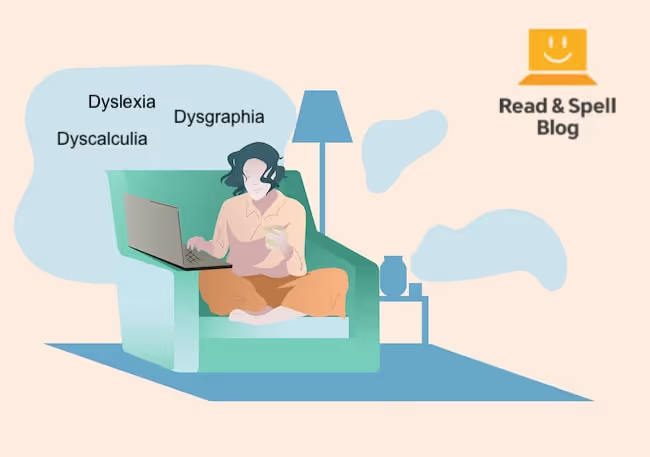
What’s the difference between dyslexia and dyspraxia?

So far, TTRS has made a big difference in her literacy and typing skills. But what my daughter and I like best about the program is it doesn't make her feel stupid. We've tried a lot of different tools, and many of them can be quite demoralizing. Not TTRS. In fact, it's the opposite. Learning to type has been a huge confidence booster for her.

This is some text inside of a div block.

Teaching adults to read

I'm fifty years-old and I'm a hairstylist but I've endured a lifetime of struggles because of my dyslexia. If it weren't for my computer, I would still be completely illiterate. I do my typing for a half hour every night. I put that in my schedule and make it a priority. The fact that I have to think about my fingers, while I'm listening to and seeing the words – it helps me bring things together.

This is some text inside of a div block.

Down syndrome interesting facts

My son Josiah is 12 and he has Down syndrome. He struggles with spelling so we have the TTRS Settings set to Remember & Repeat. He sees, hears and types a word and then the word goes away so he has to type it again. I'm pleased because while Josiah doesn't have a lot of words per minute, he is actually touch-typing! Eventually, he'll get faster, but for right now he's doing great and he is very proud of himself – and that's what counts.

This is some text inside of a div block.

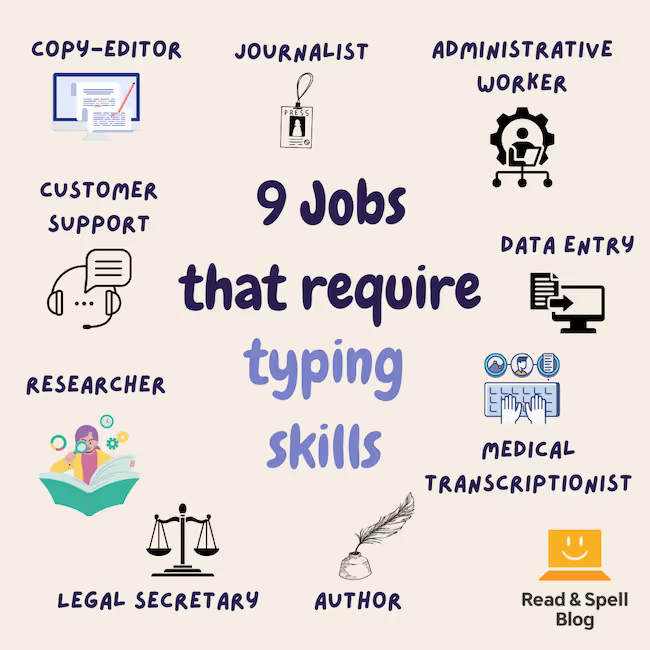
Jobs that require typing skills

Because I'm a single parent, I really like the flexibility of working from home. Right now, I do mainly home crafting - but it doesn't bring in enough income. Touch-type Read and Spell has been useful for me because it's helping me with my touch-typing and my dyslexia. In the beginning, I was really slow at typing, but after a few weeks of Touch-type Read and Spell, I went up from 25 to 45-50 words per minute.

This is some text inside of a div block.

What is adult basic education?

This is some text inside of a div block.

Spelling strategies for dyslexia

I have a ten year-old son who has dyslexia and a daughter who is in eighth grade - she also uses Touch-type Read and Spell. My son came up to me the other day and said 'so comb has a silent b.' He's noticing it because he's hearing it, seeing it and typing it, multiple times over - and this is from only 15 minutes a day.

This is some text inside of a div block.

How to build a homeschool reading program

I homeschool my children who are in fourth and fifth grade. We got Touch-type Read and Spell for typing, but with the phonics support it's benefited their spelling skills as well. They both do one lesson a day. I've noticed they're more confident and that there's been an improvement in their ability to sound out words too.

This is some text inside of a div block.

What are the hardest words to spell?

When I told her that we weren't going to do spelling anymore, just keyboarding, we were both relieved. She felt less stressed and I knew we wouldn't be butting heads. The first thing I noticed was a shift from her saying "I have no idea how to spell it," to being able to give me the first few letters. Having to physically type the words and use her body helped her remember them.

This is some text inside of a div block.

What are Dolch words?

I have a ten year-old son who has dyslexia and a daughter who is in eighth grade - she also uses Touch-type Read and Spell. My son came up to me the other day and said 'so comb has a silent b.' He's noticing it because he's hearing it, seeing it and typing it, multiple times over - and this is from only 15 minutes a day.

This is some text inside of a div block.

Dyslexia and spelling - what's the connection?

I have a ten year-old son who has dyslexia and a daughter who is in eighth grade - she also uses Touch-type Read and Spell. My son came up to me the other day and said 'so comb has a silent b.' He's noticing it because he's hearing it, seeing it and typing it, multiple times over - and this is from only 15 minutes a day.

This is some text inside of a div block.

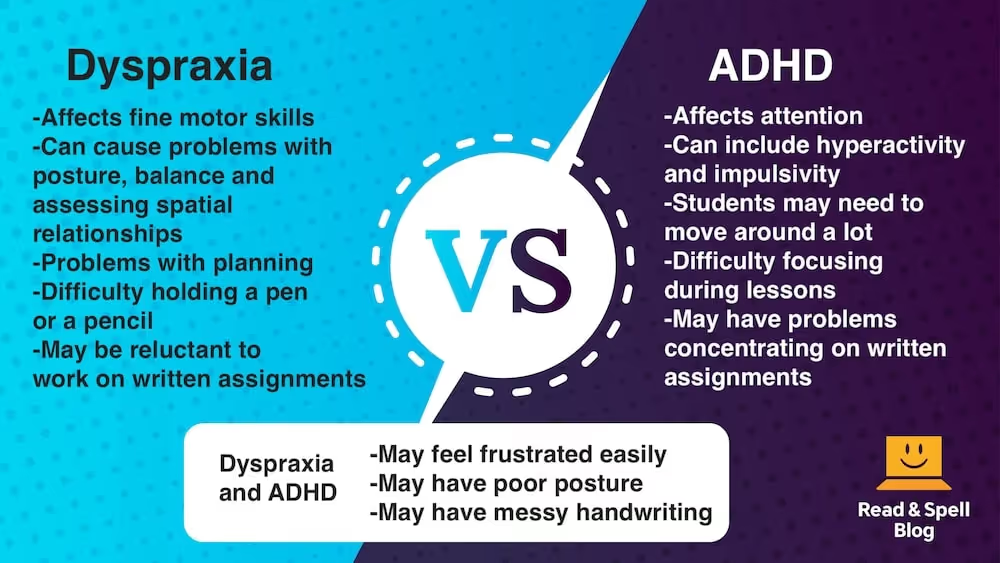
Dyspraxia vs. ADHD

Both of my boys were diagnosed with dyslexia when they were around age seven. The elder boy also has ADHD. We started off with a program that had more animation. But we found it hard to institute a daily regime because with games it's just a bit too flexible. Especially with my eldest, he needed more structure. Then we tried Touch-type Read and Spell and it really worked!

This is some text inside of a div block.

Improve writing skills for kids

We used the Touch-type Read and Spell course to teach my ten-year-old son typing, in order to help him with his writing. He really liked books but was never that keen on the reading bit. He was also quite slow to write by hand. His ideas weren't making it onto the paper and his teachers couldn't always see how intelligent and creative he was. TTRS has helped my son show his strengths!

This is some text inside of a div block.

Learning to spell for adults

I run a guest house and when I write on the computer, with spell check tools, it's easier to cover up errors, but my skills haven't really improved over the years. I'll make quite basic mistakes. I get things the wrong way around a lot. These are things that I know, but it's as though my brain goes into dyslexia mode and I can't get the words out correctly. With Touch-type Read and Spell, writing feels more automatic and I'm not overthinking the words or how to spell them, I'm just doing it.

This is some text inside of a div block.

Teaching children to read

I homeschool my children who are in fourth and fifth grade. We got Touch-type Read and Spell for typing, but with the phonics support it's benefited their spelling skills as well. They both do one lesson a day. I've noticed they're more confident and that there's been an improvement in their ability to sound out words too.

This is some text inside of a div block.

Slow processing speed

So far, TTRS has made a big difference in her literacy and typing skills. But what my daughter and I like best about the program is it doesn't make her feel stupid. We've tried a lot of different tools, and many of them can be quite demoralizing. Not TTRS. In fact, it's the opposite. Learning to type has been a huge confidence booster for her.

This is some text inside of a div block.

9 Teaching strategies for students with ADHD

Both of my boys were diagnosed with dyslexia when they were around age seven. The elder boy also has ADHD. We started off with a program that had more animation. But we found it hard to institute a daily regime because with games it's just a bit too flexible. Especially with my eldest, he needed more structure. Then we tried Touch-type Read and Spell and it really worked!

This is some text inside of a div block.

How to teach spelling words

I homeschool my children who are in fourth and fifth grade. We got Touch-type Read and Spell for typing, but with the phonics support it's benefited their spelling skills as well. They both do one lesson a day. I've noticed they're more confident and that there's been an improvement in their ability to sound out words too.

This is some text inside of a div block.

Typing programs for schools

So far, TTRS has made a big difference in her literacy and typing skills. But what my daughter and I like best about the program is it doesn't make her feel stupid. We've tried a lot of different tools, and many of them can be quite demoralizing. Not TTRS. In fact, it's the opposite. Learning to type has been a huge confidence booster for her.

This is some text inside of a div block.

Teaching literacy skills to adults

For adults who struggle with literacy, it can be difficult to admit there is a problem and even harder to seek help. We were looking for typing software that would teach keyboarding and ensure our students improved their reading and spelling skills. With Touch-type Read and Spell, the adults in our program gained new skills without experiencing the embarrassment they might feel in a classroom setting.

This is some text inside of a div block.

What motivates students to learn?

Having to write by hand made it hard for my son to get his thoughts down on paper, so we considered typing as an option. We started using Touch-type Read and Spell when my son was in Year 6 at Primary School. I used to have to help him a lot, but with the typing, he does his school work more independently, and I noticed that his spelling has improved.

This is some text inside of a div block.

Self-confidence vs self-esteem

So far, TTRS has made a big difference in her literacy and typing skills. But what my daughter and I like best about the program is it doesn't make her feel stupid. We've tried a lot of different tools, and many of them can be quite demoralizing. Not TTRS. In fact, it's the opposite. Learning to type has been a huge confidence booster for her.

This is some text inside of a div block.

Motivating kids to read

A lot of the learning for homeschool these days is online and so my kids needed to know how to type. What I liked most about TTRS is that it caters to different learning styles. We don't have any specific learning difficulties in the family, but it really supported and bolstered my kids as they were learning how to read.

This is some text inside of a div block.

Challenging spelling words

I homeschool my children who are in fourth and fifth grade. We got Touch-type Read and Spell for typing, but with the phonics support it's benefited their spelling skills as well. They both do one lesson a day. I've noticed they're more confident and that there's been an improvement in their ability to sound out words too.

This is some text inside of a div block.

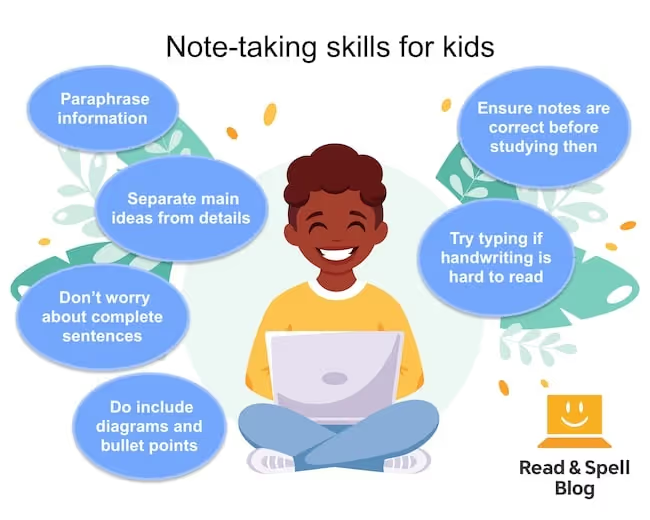
Note-taking skills for kids

My youngest son who is 11 right now has dysgraphia. He's a very smart child who can write when he's dictating, but the physical act of writing really frustrates him. I read about how typing might help with the dysgraphia and my son started using Touch-type Read and Spell. Since then, he's just done wonderfully and that's why we keep signing up.

This is some text inside of a div block.

Why is keyboarding important?

Having to write by hand made it hard for my son to get his thoughts down on paper, so we considered typing as an option. We started using Touch-type Read and Spell when my son was in Year 6 at Primary School. I used to have to help him a lot, but with the typing, he does his school work more independently, and I noticed that his spelling has improved.

This is some text inside of a div block.

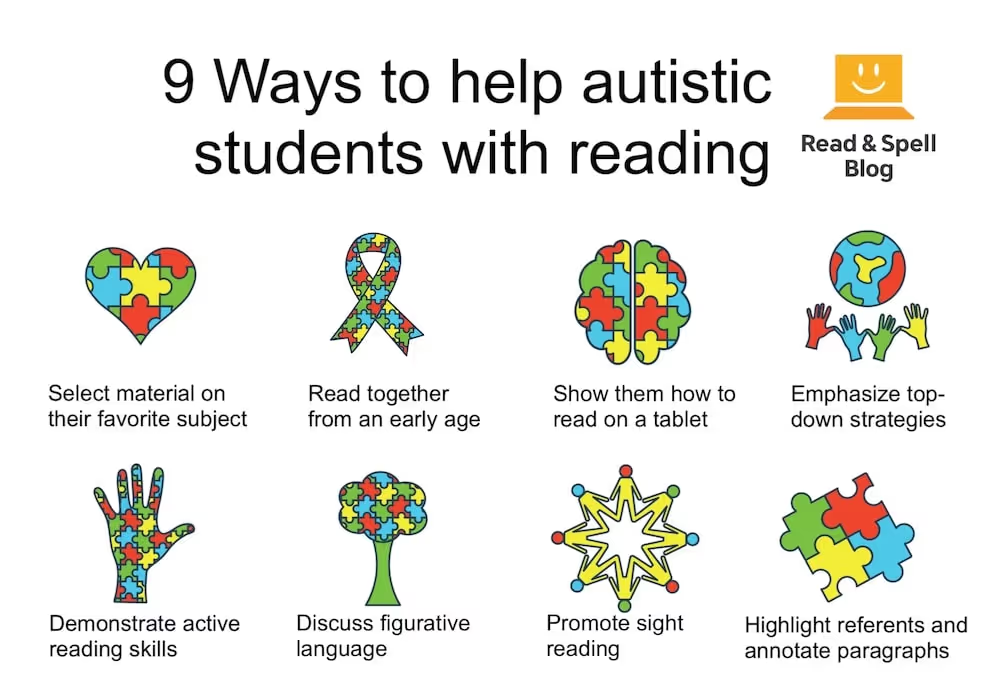
Autism and reading comprehension

TTRS provides the auditory input my son really needs. We use it to help with reading, as well as typing and spelling. With TTRS it was the first time since we had started trying different reading programs that I could see he was really comfortable. He would finish a lesson and feel like 'I can do this, I'm successful at this, and I'm making progress,' instead of just feeling overwhelmed or like he's failing.

This is some text inside of a div block.

9 Strategies for dysgraphia

My son has dysgraphia which affects his ability to write things out by hand. He also struggles with sensory issues, which means he can easily get distracted. I knew I wanted him to learn typing because I didn't want to see his creativity and ideas being hindered in any way.

This is some text inside of a div block.

Strategies for students with autism

TTRS provides the auditory input my son really needs. We use it to help with reading, as well as typing and spelling. With TTRS it was the first time since we had started trying different reading programs that I could see he was really comfortable. He would finish a lesson and feel like 'I can do this, I'm successful at this, and I'm making progress,' instead of just feeling overwhelmed or like he's failing.

This is some text inside of a div block.

What are learning difficulties?

So far, TTRS has made a big difference in her literacy and typing skills. But what my daughter and I like best about the program is it doesn't make her feel stupid. We've tried a lot of different tools, and many of them can be quite demoralizing. Not TTRS. In fact, it's the opposite. Learning to type has been a huge confidence booster for her.

This is some text inside of a div block.

The importance of motivation for kids

When I told her that we weren't going to do spelling anymore, just keyboarding, we were both relieved. She felt less stressed and I knew we wouldn't be butting heads. The first thing I noticed was a shift from her saying 'I have no idea how to spell it,' to being able to give me the first few letters. Having to physically type the words and use her body helped her remember them.

This is some text inside of a div block.

Dyslexia and foreign language learning

So far, TTRS has made a big difference in her literacy and typing skills. But what my daughter and I like best about the program is it doesn't make her feel stupid. We've tried a lot of different tools, and many of them can be quite demoralizing. Not TTRS. In fact, it's the opposite. Learning to type has been a huge confidence booster for her.

This is some text inside of a div block.

7 Tips for working with dyslexia

I work at a children's book publisher and I do most of my writing on the computer. Listening to the words in TTRS really helps me. I tend to struggle with vowel sounds and I'm always one letter off. TTRS is great because it helps me see these issues. I've also found it's easy and convenient to work on at home and in the office. Plus, I like it and I actually look forward to doing it!

This is some text inside of a div block.

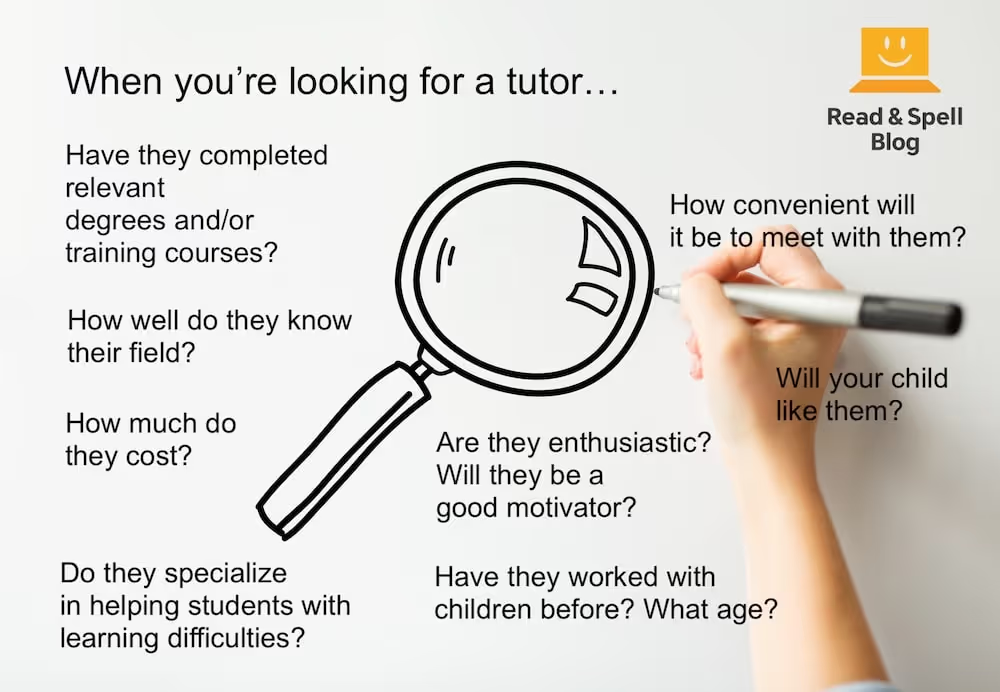
How to find a good tutor

In addition to teaching my kids to type, the program also hugely benefited my son with dyslexia in terms of his spelling and writing. We first noticed my son was dyslexic and might need extra support when his development just wasn't in line with his general cognition. He is extremely bright but he was not getting on with his schoolwork in a way that you would have expected for a child of his age, with his background and experience.

This is some text inside of a div block.

Left-handed and dyslexic

We've been using TTRS since my son was 10. We knew his spelling was below level and I had suspected the dyslexia, but it's only recently that we've had a formal assessment. I wanted him to learn typing because he struggled with handwriting too and I knew that the sooner he learned to type, the better. I chose TTRS because of the literacy skills support.

This is some text inside of a div block.

How to improve writing skills in English

I began using the TTRS course after my English literacy level was tested and seemed low. I'm originally from South America and I work as a doctor in the UK. I also have dyslexia. Before TTRS, I used to type slowly and inaccurately with two-fingers. Now I am faster at the computer, make fewer errors, and write more professionally. My vocabulary has noticeably expanded too. I learned new words by looking up vocabulary using the dictionary tool inside TTRS.

This is some text inside of a div block.

ADHD Reading problems

Both of my boys were diagnosed with dyslexia when they were around age seven. The elder boy also has ADHD. We started off with a program that had more animation. But we found it hard to institute a daily regime because with games it's just a bit too flexible. Especially with my eldest, he needed more structure. Then we tried Touch-type Read and Spell and it really worked!

This is some text inside of a div block.

7 Dyslexia strengths you should know about

So far, TTRS has made a big difference in her literacy and typing skills. But what my daughter and I like best about the program is it doesn't make her feel stupid. We've tried a lot of different tools, and many of them can be quite demoralizing. Not TTRS. In fact, it's the opposite. Learning to type has been a huge confidence booster for her.

This is some text inside of a div block.

Dyspraxia vs. apraxia of speech

I was looking for a keyboarding program and learned about Touch-type Read and Spell from some other homeschool families. My son is in seventh grade and already knew how to type, but I wanted to keep building on that skill. TTRS is a different approach to spelling. Through typing sets of words, it's teaching him a picture of what a word looks and sounds like.

This is some text inside of a div block.

Touch typing for dyslexics

I have a ten year-old son who has dyslexia and a daughter who is in eighth grade - she also uses Touch-type Read and Spell. My son came up to me the other day and said 'so comb has a silent b.' He's noticing it because he's hearing it, seeing it and typing it, multiple times over - and this is from only 15 minutes a day.

This is some text inside of a div block.

Orton-Gillingham reading instruction

A lot of the learning for homeschool these days is online and so my kids needed to know how to type. What I liked most about TTRS is that it caters to different learning styles. We don't have any specific learning difficulties in the family, but it really supported and bolstered my kids as they were learning how to read.

This is some text inside of a div block.

Teaching phonemic awareness

I have a ten year-old son who has dyslexia and a daughter who is in eighth grade - she also uses Touch-type Read and Spell. My son came up to me the other day and said ‘so comb has a silent b.’ He’s noticing it because he’s hearing it, seeing it and typing it, multiple times over - and this is from only 15 minutes a day.

This is some text inside of a div block.

9 Quotes about dyslexia

So far, TTRS has made a big difference in her literacy and typing skills. But what my daughter and I like best about the program is it doesn’t make her feel stupid. We’ve tried a lot of different tools, and many of them can be quite demoralizing. Not TTRS. In fact, it’s the opposite. Learning to type has been a huge confidence booster for her.

This is some text inside of a div block.

Writing in all caps

Having to write by hand made it hard for my son to get his thoughts down on paper, so we considered typing as an option. We started using Touch-type Read and Spell when my son was in Year 6 at Primary School. I used to have to help him a lot, but with the typing, he does his school work more independently, and I noticed that his spelling has improved.

This is some text inside of a div block.

Jobs for people with Down syndrome

We had looked into typing before but had been at a bit of a loss as to where to go for a course that would be easy and clear enough for Fintan to do. We began in February and we’re up to Level 7 now. There’s a big cheer that comes with the score on-screen and he gets so excited! TTRS is something he can manage on his own - he takes pride in it.

This is some text inside of a div block.

How to improve typing speed

Over the years I’ve sort of self-taught myself typing, but I really like learning with Touch-type Read and Spell and it’s made a difference for me at work already! That’s because it makes me think about what I’m typing. When I write emails I normally look up and there are about ten red lines with errors. Now it’s about half that, and that’s only from using TTRS for 3-4 weeks.

This is some text inside of a div block.

A multi-sensory approach to reading

A lot of the learning for homeschool these days is online and so my kids needed to know how to type. What I liked most about TTRS is that it caters to different learning styles. We don’t have any specific learning difficulties in the family, but it really supported and bolstered my kids as they were learning how to read.

This is some text inside of a div block.

10 Fluency strategies for struggling readers

A lot of the learning for homeschool these days is online and so my kids needed to know how to type. What I liked most about TTRS is that it caters to different learning styles. We don’t have any specific learning difficulties in the family, but it really supported and bolstered my kids as they were learning how to read.

This is some text inside of a div block.

Dyslexia reading strategies for students

I’ve found that children with dyslexia really benefit from the TTRS course, as do English as an Additional Language (EAL) learners and students with motor-skills difficulties. Following the lessons improves their concentration, confidence and spelling, and gives them invaluable typing skills they can use when handwriting is too difficult. The students are always saying to us ‘When are we going to do our touch-typing!’

This is some text inside of a div block.

Developing spelling skills

I homeschool my children who are in fourth and fifth grade. We got Touch-type Read and Spell for typing, but with the phonics support it’s benefited their spelling skills as well. They both do one lesson a day. I’ve noticed they’re more confident and that there’s been an improvement in their ability to sound out words too.

This is some text inside of a div block.

What is child-led learning?

When I told her that we weren’t going to do spelling anymore, just keyboarding, we were both relieved. She felt less stressed and I knew we wouldn’t be butting heads. The first thing I noticed was a shift from her saying “I have no idea how to spell it,” to being able to give me the first few letters. Having to physically type the words and use her body helped her remember them.

This is some text inside of a div block.

7 Activities for stroke patients

When I used to do e-mails it was a nightmare, but now, what would take me half an hour I can do in five minutes. It's been two years since I started using the Touch-type Read and Spell course. In the beginning, one or two modules might have taken me half an hour and I’d try and do that every day. These days I’m much faster and I can do up to ten modules in one sitting. TTRS has given me confidence.

This is some text inside of a div block.

3 Common reading problems for students

A lot of the learning for homeschool these days is online and so my kids needed to know how to type. What I liked most about TTRS is that it caters to different learning styles. We don’t have any specific learning difficulties in the family, but it really supported and bolstered my kids as they were learning how to read.

This is some text inside of a div block.

Volunteering to teach adults to read

My dyslexia has held me back in different ways. I could have gone for a manager’s post earlier than I did but I figured it would mean writing things down which I knew I wasn’t good at. I’m enjoying doing Touch-type Read and Spell. I got myself a wireless keyboard to use with my iPad and was even able to take the course on holiday.

This is some text inside of a div block.

Encouraging children with learning difficulties

I’ve found that children with dyslexia really benefit from the TTRS course, as do English as an Additional Language (EAL) learners and students with motor-skills difficulties. Following the lessons improves their concentration, confidence and spelling, and gives them invaluable typing skills they can use when handwriting is too difficult. The students are always saying to us ‘When are we going to do our touch-typing!’

This is some text inside of a div block.

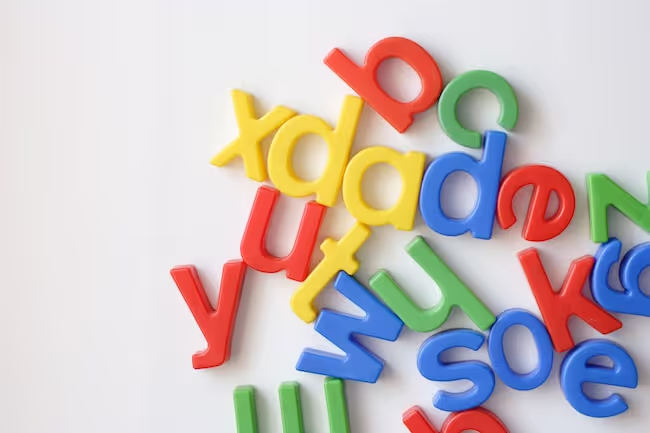
B and d letter reversal

We’ve been using TTRS since my son was 10. We knew his spelling was below level and I had suspected the dyslexia, but it’s only recently that we’ve had a formal assessment. I wanted him to learn typing because he struggled with handwriting too and I knew that the sooner he learned to type, the better. I chose TTRS because of the literacy skills support.

This is some text inside of a div block.

5 Literacy blogs

I’ve always known I had dyslexia but for most of my life I tried to ignore it. When I was younger my school didn’t diagnose me, and it was only when I took an adult education course that the dyslexia was picked up. What I like about TTRS is that it’s easy and straightforward to use. Typing is a useful skill for me to have and because this program is typing for individuals with dyslexia, it’s going to really benefit my reading and spelling too.

This is some text inside of a div block.

Aphasia recovery time following a stroke

When I used to do e-mails it was a nightmare, but now, what would take me half an hour I can do in five minutes. It's been two years since I started using the Touch-type Read and Spell course. In the beginning, one or two modules might have taken me half an hour and I’d try and do that every day. These days I’m much faster and I can do up to ten modules in one sitting. TTRS has given me confidence.

This is some text inside of a div block.

Dysarthria vs. aphasia

When I used to do e-mails it was a nightmare, but now, what would take me half an hour I can do in five minutes. It's been two years since I started using the Touch-type Read and Spell course. In the beginning, one or two modules might have taken me half an hour and I’d try and do that every day. These days I’m much faster and I can do up to ten modules in one sitting. TTRS has given me confidence.

This is some text inside of a div block.

How to help with spelling

I homeschool my children who are in fourth and fifth grade. We got Touch-type Read and Spell for typing, but with the phonics support it’s benefited their spelling skills as well. They both do one lesson a day. I’ve noticed they’re more confident and that there’s been an improvement in their ability to sound out words too.

This is some text inside of a div block.

8 Email management tips for busy parents

I homeschool my children who are in fourth and fifth grade. We got Touch-type Read and Spell for typing, but with the phonics support it’s benefited their spelling skills as well. They both do one lesson a day. I’ve noticed they’re more confident and that there’s been an improvement in their ability to sound out words too.

This is some text inside of a div block.

How to avoid wrist pain from typing

Over the years I’ve sort of self-taught myself typing, but I really like learning with Touch-type Read and Spell and it’s made a difference for me at work already! That’s because it makes me think about what I’m typing. When I write emails I normally look up and there are about ten red lines with errors. Now it’s about half that, and that’s only from using TTRS for 3-4 weeks.

This is some text inside of a div block.

6 Dyslexia blogs for parents and teachers

We’ve been using TTRS since my son was 10. We knew his spelling was below level and I had suspected the dyslexia, but it’s only recently that we’ve had a formal assessment. I wanted him to learn typing because he struggled with handwriting too and I knew that the sooner he learned to type, the better. I chose TTRS because of the literacy skills support.

This is some text inside of a div block.

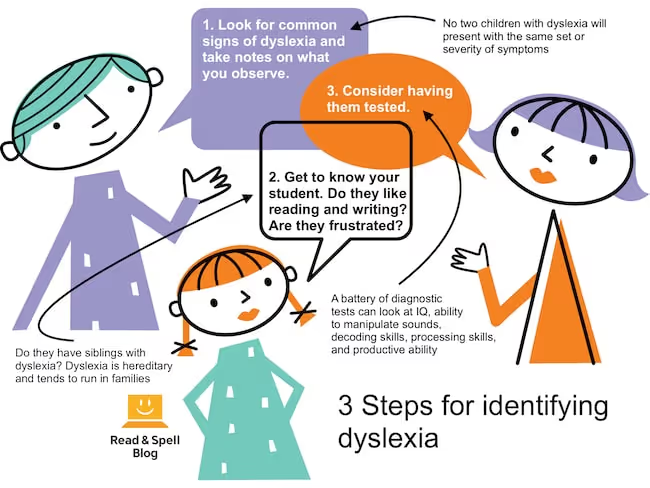
Identifying dyslexia in 3 easy steps

When I told her that we weren’t going to do spelling anymore, just keyboarding, we were both relieved. She felt less stressed and I knew we wouldn’t be butting heads. The first thing I noticed was a shift from her saying “I have no idea how to spell it,” to being able to give me the first few letters. Having to physically type the words and use her body helped her remember them.

This is some text inside of a div block.

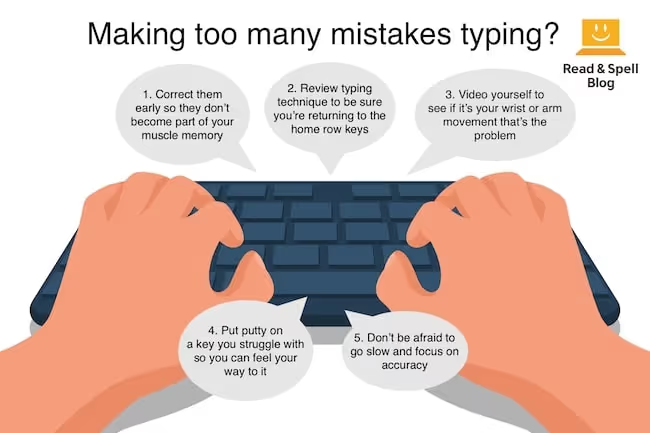
Typing without looking and why it's so hard

Over the years I’ve sort of self-taught myself typing, but I really like learning with Touch-type Read and Spell and it’s made a difference for me at work already! That’s because it makes me think about what I’m typing. When I write emails I normally look up and there are about ten red lines with errors. Now it’s about half that, and that’s only from using TTRS for 3-4 weeks.

This is some text inside of a div block.

7 Signs of a gifted child

My son has dysgraphia which affects his ability to write things out by hand. He also struggles with sensory issues, which means he can easily get distracted. I knew I wanted him to learn typing because I didn’t want to see his creativity and ideas being hindered in any way.

This is some text inside of a div block.

Dyslexia and dysgraphia - what's the difference?

So far, TTRS has made a big difference in her literacy and typing skills. But what my daughter and I like best about the program is it doesn’t make her feel stupid. We’ve tried a lot of different tools, and many of them can be quite demoralizing. Not TTRS. In fact, it’s the opposite. Learning to type has been a huge confidence booster for her.

This is some text inside of a div block.

What's the best font for dyslexia?

I’ve found that children with dyslexia really benefit from the TTRS course, as do English as an Additional Language (EAL) learners and students with motor-skills difficulties. Following the lessons improves their concentration, confidence and spelling, and gives them invaluable typing skills they can use when handwriting is too difficult. The students are always saying to us ‘When are we going to do our touch-typing!’

This is some text inside of a div block.

My child has dyslexia

So far, TTRS has made a big difference in her literacy and typing skills. But what my daughter and I like best about the program is it doesn’t make her feel stupid. We’ve tried a lot of different tools, and many of them can be quite demoralizing. Not TTRS. In fact, it’s the opposite. Learning to type has been a huge confidence booster for her.

This is some text inside of a div block.

Does dyslexia affect speech?

I was looking for a keyboarding program and learned about Touch-type Read and Spell from some other homeschool families. My son is in seventh grade and already knew how to type, but I wanted to keep building on that skill. TTRS is a different approach to spelling. Through typing sets of words, it’s teaching him a picture of what a word looks and sounds like.

This is some text inside of a div block.

Dysgraphia in adults

For adults who struggle with literacy, it can be difficult to admit there is a problem and even harder to seek help. We were looking for typing software that would teach keyboarding and ensure our students improved their reading and spelling skills. With Touch-type Read and Spell, the adults in our program gained new skills without experiencing the embarrassment they might feel in a classroom setting.

This is some text inside of a div block.

Dyslexia at work: Strategies for working from home

I work at a children’s book publisher and I do most of my writing on the computer. Listening to the words in TTRS really helps me. I tend to struggle with vowel sounds and I’m always one letter off. TTRS is great because it helps me see these issues. I’ve also found it’s easy and convenient to work on at home and in the office. Plus, I like it and I actually look forward to doing it!

This is some text inside of a div block.

Irlen Syndrome

This is some text inside of a div block.

7 Ways to help a frustrated student

I’ve found that children with dyslexia really benefit from the TTRS course, as do English as an Additional Language (EAL) learners and students with motor-skills difficulties. Following the lessons improves their concentration, confidence and spelling, and gives them invaluable typing skills they can use when handwriting is too difficult. The students are always saying to us ‘When are we going to do our touch-typing!’

This is some text inside of a div block.

How to help a child with dyslexia at home

This is some text inside of a div block.

Recognizing an auditory processing disorder in children

My son was diagnosed with ADD, auditory processing disorder, dyslexia and dysgraphia in early elementary school. Before TTRS, he could only verbally tell me what he wanted to say. It took so much effort and time for him to write it out. Learning how to touch-type really helped push his skills ahead and he’s at grade-level now!

This is some text inside of a div block.

Signs your child is dyslexic

We've been using TTRS since my son was 10. We knew his spelling was below level and I had suspected the dyslexia, but it’s only recently that we’ve had a formal assessment. I wanted him to learn typing because he struggled with handwriting too and I knew that the sooner he learned to type, the better. I chose TTRS because of the literacy skills support.

This is some text inside of a div block.

Visual processing disorder and dyslexia

So far, TTRS has made a big difference in her literacy and typing skills. But what my daughter and I like best about the program is it doesn’t make her feel stupid. We’ve tried a lot of different tools, and many of them can be quite demoralizing. Not TTRS. In fact, it’s the opposite. Learning to type has been a huge confidence booster for her.

This is some text inside of a div block.

Computer basics for adults

Over the years I’ve sort of self-taught myself typing, but I really like learning with Touch-type Read and Spell and it’s made a difference for me at work already! That’s because it makes me think about what I’m typing. When I write emails I normally look up and there are about ten red lines with errors. Now it’s about half that, and that’s only from using TTRS for 3-4 weeks.

This is some text inside of a div block.

9 Tips for adult learners

I’ve always known I had dyslexia but for most of my life I tried to ignore it. When I was younger my school didn’t diagnose me, and it was only when I took an adult education course that the dyslexia was picked up. What I like about TTRS is that it’s easy and straightforward to use. Typing is a useful skill for me to have and because this program is typing for individuals with dyslexia, it’s going to really benefit my reading and spelling too.

This is some text inside of a div block.

What's the difference between aphasia, dysphasia and dysarthria?

When I used to do e-mails it was a nightmare, but now, what would take me half an hour I can do in five minutes. It's been two years since I started using the Touch-type Read and Spell course. In the beginning, one or two modules might have taken me half an hour and I’d try and do that every day. These days I’m much faster and I can do up to ten modules in one sitting. TTRS has given me confidence.

This is some text inside of a div block.

3 Causes of spelling difficulties

When I told her that we weren’t going to do spelling anymore, just keyboarding, we were both relieved. She felt less stressed and I knew we wouldn’t be butting heads. The first thing I noticed was a shift from her saying “I have no idea how to spell it,” to being able to give me the first few letters. Having to physically type the words and use her body helped her remember them.

This is some text inside of a div block.

6 Gifted children problems

My son has dysgraphia which affects his ability to write things out by hand. He also struggles with sensory issues, which means he can easily get distracted. I knew I wanted him to learn typing because I didn’t want to see his creativity and ideas being hindered in any way.

This is some text inside of a div block.

When learning disabilities in adults go undiagnosed

I’ve always known I had dyslexia but for most of my life I tried to ignore it. When I was younger my school didn’t diagnose me, and it was only when I took an adult education course that the dyslexia was picked up. What I like about TTRS is that it’s easy and straightforward to use. Typing is a useful skill for me to have and because this program is typing for individuals with dyslexia, it’s going to really benefit my reading and spelling too.

This is some text inside of a div block.

6 ADHD blogs

My son was diagnosed with ADD, auditory processing disorder, dyslexia and dysgraphia in early elementary school. Before TTRS, he could only verbally tell me what he wanted to say. It took so much effort and time for him to write it out. Learning how to touch-type really helped push his skills ahead and he’s at grade-level now!

This is some text inside of a div block.

Is dyslexia a disability?

I work at a children’s book publisher and I do most of my writing on the computer. Listening to the words in TTRS really helps me. I tend to struggle with vowel sounds and I’m always one letter off. TTRS is great because it helps me see these issues. I’ve also found it’s easy and convenient to work on at home and in the office. Plus, I like it and I actually look forward to doing it!

This is some text inside of a div block.